

How it works
From a question at six o'clock to a basket at your door.
Seven steps, start to finish. The whole loop, slowly, with the app screens you will actually see.
Step one
The taste quiz
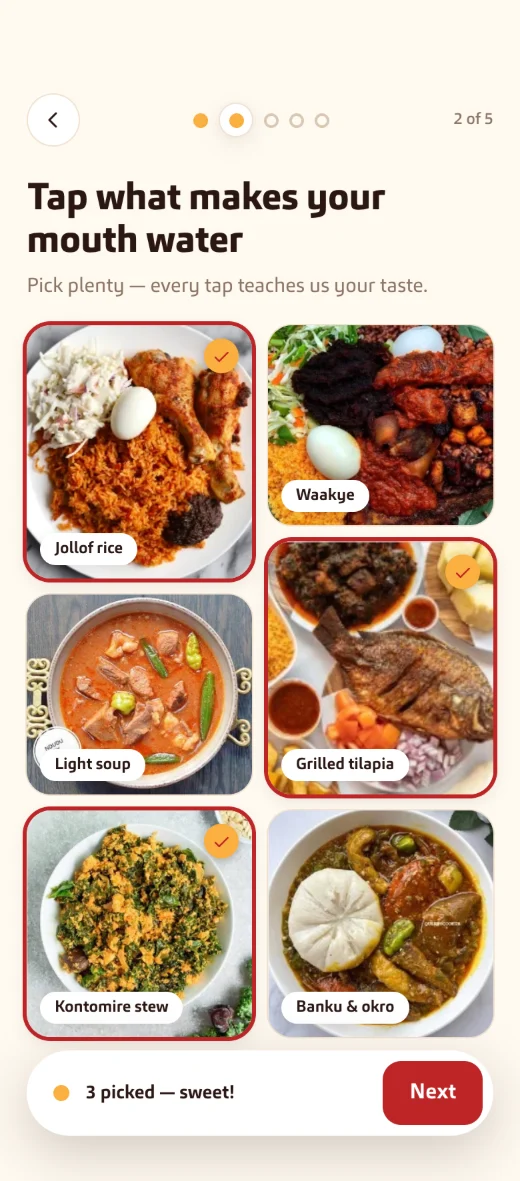
Five questions, no login, under two minutes. You tell ChopTime what your household eats: local, continental, or the honest mix most homes actually run on. Then you pick the dishes you want to see more of, say how long you have on a weekday, and how many people sit down to eat.
- No account needed. Take the quiz as a guest and keep your plan.
- Five questions. Food vibe, dishes, cooking time, the table, your goal.
- Retake it whenever. Tastes change, so the plan changes with them.
Step two
The plan gets built
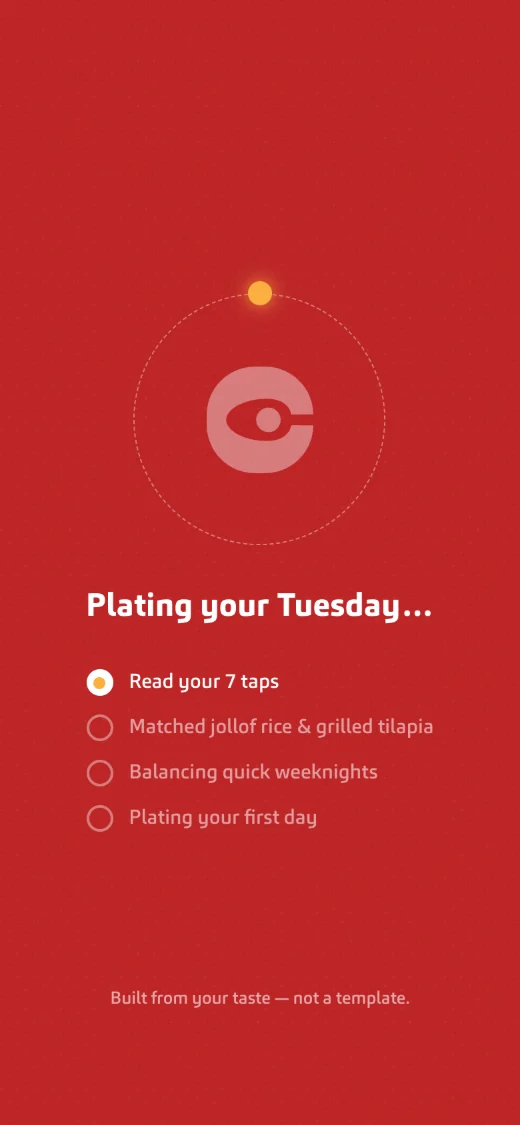
ChopTime puts the plan together while you wait. It reads your answers against a library of dishes written for Ghanaian kitchens and fills every slot you asked for, balancing what you said you liked against the time you said you had.
- Your horizon, not ours. A week, a fortnight, a month, or the four days until payday.
- Breakfast, lunch, supper. Or only the meals you actually plan.
- Built from real dishes. Waakye, jollof, kontomire and ampesi, tuo zaafi, red red.
Step three
Open your plan and it is already decided
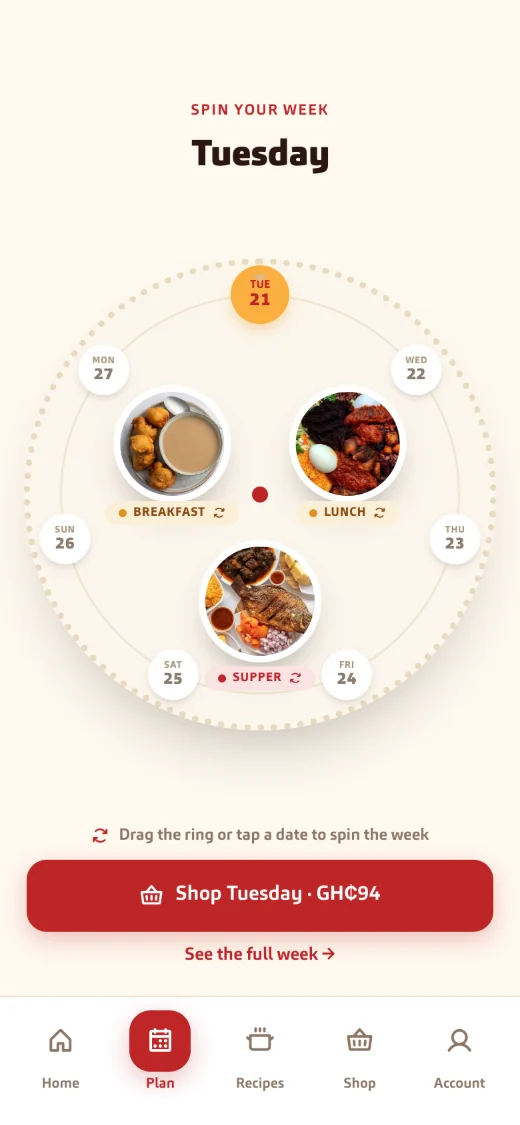
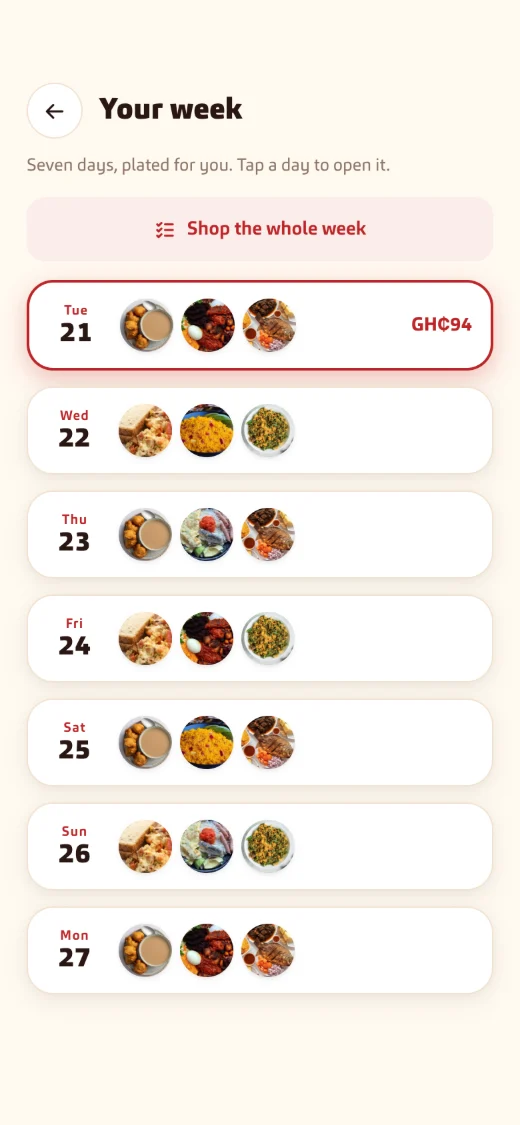
This is the part that gives you your evenings back. Every day has its meals, named and pictured, before you get home. Nothing to choose at six o'clock, because it was chosen when you built the plan. If a meal does not suit, swap it in one tap and the rest of the week stays as it is.
- Swap any meal. Nothing else in the plan moves.
- Local names kept. Banku ne adwene, komi ke le, omo tuo.
- Scaled to your table. Quantities follow the household you described.
Step four
Every meal opens into a proper recipe
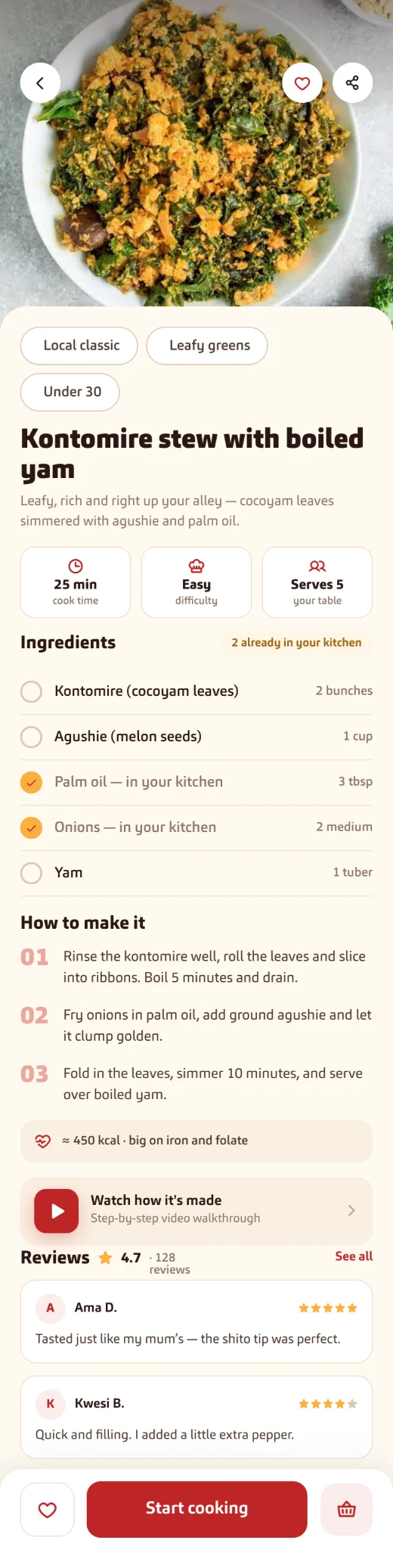
Tap a meal and you get a recipe written for a Ghanaian kitchen, in Ghanaian measures, with timings that tell the truth. A bundle of kontomire, not two hundred grams of leafy greens. Three cups of fermented corn dough. Thirty minutes turning banku over the fire, because that is how long it takes.
- Honest timings. Every step carries its own, so you know before you start.
- Ghanaian ingredients. Kpakpo shito, momone, wele, gari, waakye leaves.
- Prep and fire, separately. Twenty minutes of one, fifty of the other.
Step five
The recipe fills a basket
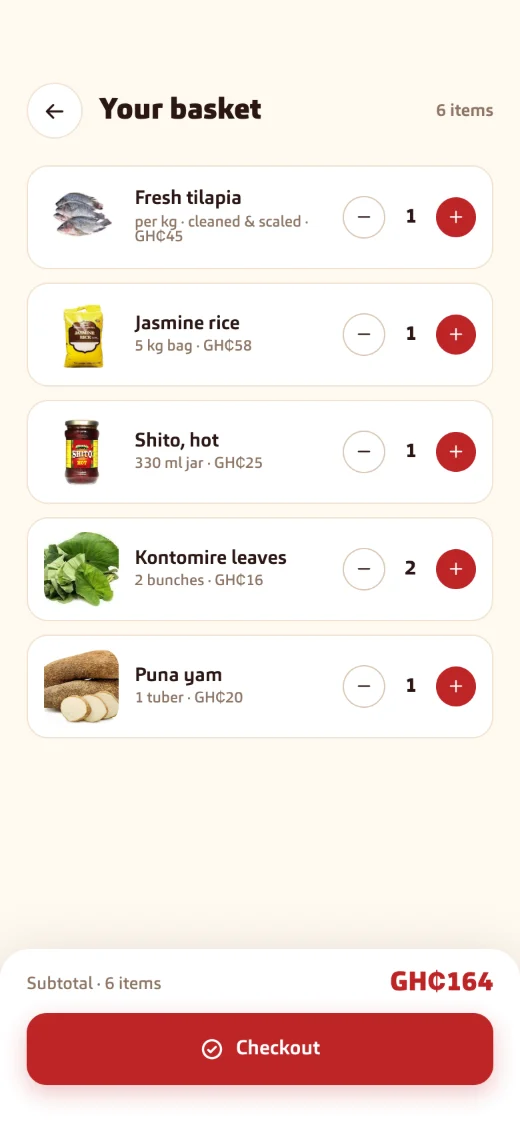
The recipe already knows what it needs, so the basket builds itself. Market units, household quantities, and a note when something is already in your kitchen so you do not buy it twice. Shop one recipe or the whole week.
- Market units. A bundle, a bag, a pack, a jar. Not abstract weights.
- Nothing spare. Quantities for the meals you planned, not a round number.
- Skip what you have. Half the basket is often already in the cupboard.
Step six
It comes to you in Accra
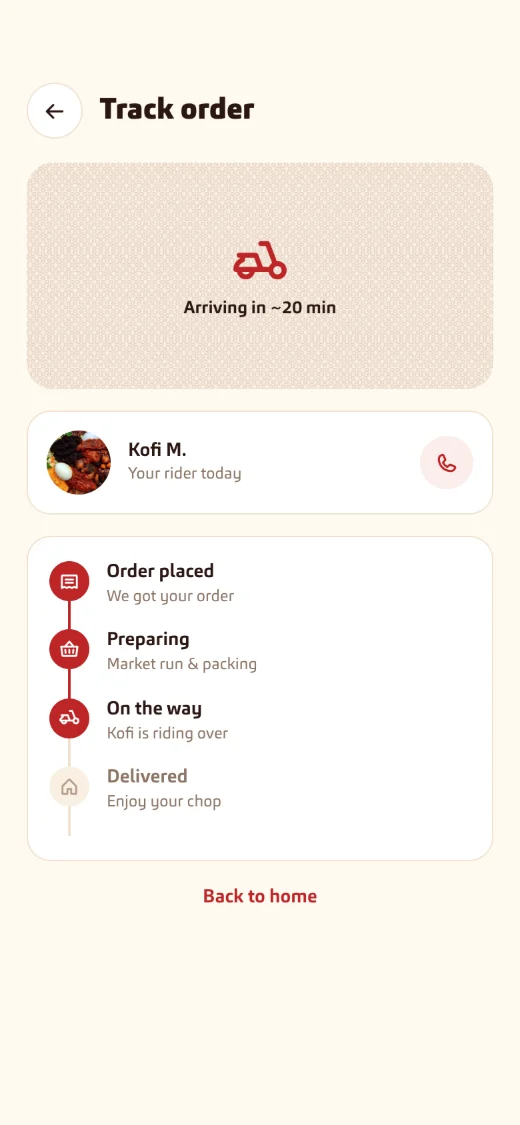
Pay with Mobile Money or card and the order goes out for delivery in Accra. Follow it from the app while you get on with your evening. If you cook from outside Ghana the plans and the recipes still work; the shopping is Accra for now.
- Mobile Money or card. Whichever you actually use.
- Track it. From confirmed, to on its way, to delivered.
- Accra today. More of Ghana as we grow.
Step seven
Then it gets better at knowing you
Every swap you make and every meal you cook teaches ChopTime something. The plan you get in month three is not the plan you got on day one. It learns which nights you have no time, which dishes keep coming back to the table, and which ones you quietly never cook.
- Swaps count. What you replace matters as much as what you keep.
- Budget and time are settings. Not guesses we make for you.
- Fasting and observance. Set it once and the plan works around it.
And then it starts again.
Plan, cook, shop, plan. The loop is the product, and you only answer the quiz once.